Thursday, 12 December 2013

Office Opening Times


Please find below our office opening hours over the Christmas and New Year holidays.

All enquires should be made during normal office hours.  Only emergency calls will be answered by our on call manager. 

Wishing you and your family a wonderful Christmas and New Year.


OFFICE HOURS
EMERGENCY ON CALL
Monday 23rd Dec
09:00 – 17:00
0845 0945 279
or
0131 618 0777
Tuesday 24th Dec
09:00 – 17:00
Wednesday (Christmas Day)
Closed
Thursday (Boxing Day)
Closed
Friday 27th Dec
09:00 – 17:00
Saturday 28th Dec
Closed
Sunday 29th Dec
Closed


OFFICE HOURS
EMERGENCY ON CALL
Monday 30th Dec
09:00 – 17:00
0845 0945 279
or
0131 618 0777
Tuesday 31st  Dec
09:00 – 17:00
Wednesday (New Year)
Closed
Thursday (New Year)
Closed
Friday 3rd Jan
09:00 – 17:00
Saturday 4th Jan
Closed
Sunday 5th Jan
Closed

Wednesday, 4 December 2013

ROBOTIC WHEELCHAIR

Two wheelchair control technology advancements have made headlines this week. One, reported on by BBC Health, involves using a tongue piercing to move your wheelchair. And the other needs little intervention from the wheelchair user at all.
It applies lessons learned from work on self-driving cars to making powered wheelchairs safer and less unwieldy for people who find accurate movements a struggle.
"Robotic Adaptation to Humans Adapting to Robots, (Radhar), was an EU-funded initiative which ran from 2010 until this September. Ian Steadman writes for New Statesman that Radhar has created a semi-autonomous system for wheelchairs.
He says that a wheelchair that drives itself without any intervention wouldn't work. "A better method is to smooth out jerky journeys, estimating where it thinks its owner wants to go and making subtle alterations to the journey route that leaves the user feeling absolutely in control, without the sensation of being ferried around."
Radhar's system uses two Kinect cameras and an onboard computer to do just that.
One camera scans the surroundings and makes a map. The computer uses this to spot obstacles and generate possible routes.
The other camera scans the wheelchair user, "assuming that the destination correlates with the direction of gaze. It also recognises if someone has a part of their body sticking out to the side, and knows to warn of the danger of hitting something as a result".

Wednesday, 6 November 2013

ANNUAL REPORT


Every year we publish a short summary of some of the things we have achieved together.  This is collated into our Annual Report.

I am proud of what we have achieved and what we plan to do in the coming year.


For those new to Social Care Alba this is a good place to see just some of what we have been doing, as well as some of the projects that are currently in progress.

You can view our Annual Report HERE

Thank you to all those who have and continue to contribute to our success.

Nataly and Stephen 

On behalf of everyone at Social Care Alba

IT'S GOOD TO TALK

There is nothing worse than thinking you have asked someone to do something then nothing has happened.

The image of a swan gliding across a pond comes to mind.  Whilst on the surface there appears to be no effort, underneath their feet are paddling furiously.

The same can be said when a request is submitted to the office.  We always work hard to answer your enquiries as quickly as possible, however sometimes this may mean we need to do some work in the background. 

New System Launched


Starting from today we are introducing a new system to help keep you updated on your enquiry as part of a 3 month trial.  The system will:

  •          Be used to record all requests and enquiries from staff and service users.
  •          Allow us to prioritise the enquiry and set timescales for resolution
  •          Allow us to publish progress notes
  •          Give you secure access to your enquiry and view progress online.
  •          View when an enquiry has been resolved

To make the new system as simple as possible we will phase it in over the coming months.  If you have an enquiry you can still contact us by:

  •          Phone
  •          Email
  •          Text
  •          Letter
  •          In person
  •          Via a staff member

We will then log your enquiry on the system and create an online account for you.  You can then access updates to your enquiry 24/7.   In the coming months you will also be able to access the system via our website.

We hope you find the support system useful and we welcome any and all feedback.

Stephen Wilson

Director

Tuesday, 29 October 2013

WHAT IS INFECTION CONTROL?


Infection Prevention and Control is about preventing infections particularly those that are associated with healthcare – for example, ways of preventing infections being spread on the hands of healthcare workers or carers.

We all have a part to play in controlling infection.

Infections are caused by bacteria, fungi or viruses entering the body.  They can be minor and stay in one area, like a boil or wound, or they can spread throughout the body, like Flu or a blood stream infection.  Often, infections are easily dealt with, but sometimes they can cause serious problems.


OUR COMMITMENT

Social care Alba takes preventing, minimising and controlling the risk of healthcare associated infection to service users/staff/ and carers very seriously.  Ways in which we do this include:

·         Education and training in infection control for all staff employed by SCA
·         Staff using good hand washing technique or using alcohol handrubs
·         The use of disposable aprons and gloves


FUNCTIONS OF THE INFECTION CONTROL CHAMPION

  •        Provision of information education and advice on Infection Control
  •          Monitoring and reviewing infections in the community eg MRSA and C difficile
  •          Development of Infection Control policies and procedures for health care staff
  •          Advise on measures to tackle healthcare associated infections
  •          Support  in the prevention, management and control of infection
  •          Monitoring of infection control standards and practices
  •          Changing behaviours, promoting a culture of cleanliness
  •          High standards of cleanliness
  •          Making sure equipment is clean
  •          How to recognise signs of infection
  •          Educating service users/healthcare professionals and carers

  
USEFUL RESOURCES

The Preventing Infection in Care at Home toolkit allows staff to choose information when presented with common infection risks when caring for someone in the home and reveals the "must do" SICP guidance that should be followed to minimise the risk of spreading infection to themselves, other staff and the person receiving care.  It also highlights key advice on factors "to consider" as part of the SICPs and identifies other factors that keep staff and those being cared for safe.  Alternatively if information is required simply on each SICP and how they relate to community care in the home then a quick link is provided.

The toolkit is presented to community health and social care staff in the form of a digital app and a pocket guide for easy reference.
Digital App
The Apple digital app is available HERE
The Android digital app is available HERE
 Pocket Guide
The pocket guide is currently out of print but Stephen has secured some copies which he will distribute to everyone.  You can view the guide HERE
  
SUPPORT AND ADVICE

If you need more support or advice then please do not hesitate to contact me via the office or blog.

Daniela Angeli

Infection Control Champion


Tuesday, 22 October 2013

Phones For All

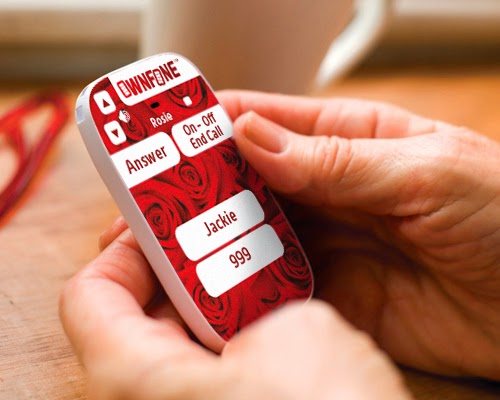
Earlier this year I read about a company who had created a phone for children.  OWNFONE is the little personalised phone that connects you directly to the most important people in your life - that's it! Just press the name of the person you want to talk to.

Immediately seeing the benefits of a simplified custom phone, I contacted them suggesting their phone design could be adapted for other vulnerable groups such as the elderly, those with dementia or visual impairment.

Following up recently I am glad to see that phones for "Seniors" are now available.  The design can be customised to include:

  • Phones in a variety of colours
  • Name buttons instead or numbers 
  • Pictures instead of names or numbers
  • A simplified layout

Soon to Come

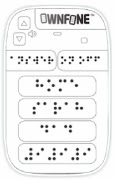
The other suggestion of phones for those with visual impairment can also be created.  This development is being extended further with phones preprinted with BRAILLE to come soon.

So if you think you or someone close to you may benefit from a simple, personal phone this company are worth considering.

We will keep you up to date with other useful developments soon.

Stephen Wilson, Director

Monday, 21 October 2013

Dementia Design Survey

A team of researchers working in the School of Applied Social Sciences at the University of Stirling are currently undertaking a project that will help inform best practice in the design of residential environments for people living with dementia and sight loss. This includes aspects of the layout, décor and fixtures and fittings used in people's homes.

Through their exploration of the scientific literature, expert opinion, and the views of people with dementia and/or sight loss and those who support and care for them, they have identified design elements such as colour, contrast, and lighting that might be important in home environments for people with dementia and sight loss.

At this stage of the study, they would like to know what you think about these and therefore would like invite you to take part in a short survey.

The survey can be completed online until the 28th October 2013 and can be accessed using the following link: SURVEY

Should you wish to discuss the study further, the team can be contacted via email or telephone:

Dr Louise McCabe
Senior Lecturer, Dementia Studies, University of Stirling


Alternatively you may want to view the Dementia Services Development website HERE, which has a range of useful information and resources.

Stephen Wilson
Director